Converts solar DC energy into appliance-ready AC power for homes, shops, and small commercial sites.
Solar Inverters
The inverter is the control point that makes solar power usable for daily loads.
Solar panels produce DC power. A solar inverter converts it into AC power, manages generation, supports safety protections, and helps the system work with the grid, batteries, or monitoring tools.
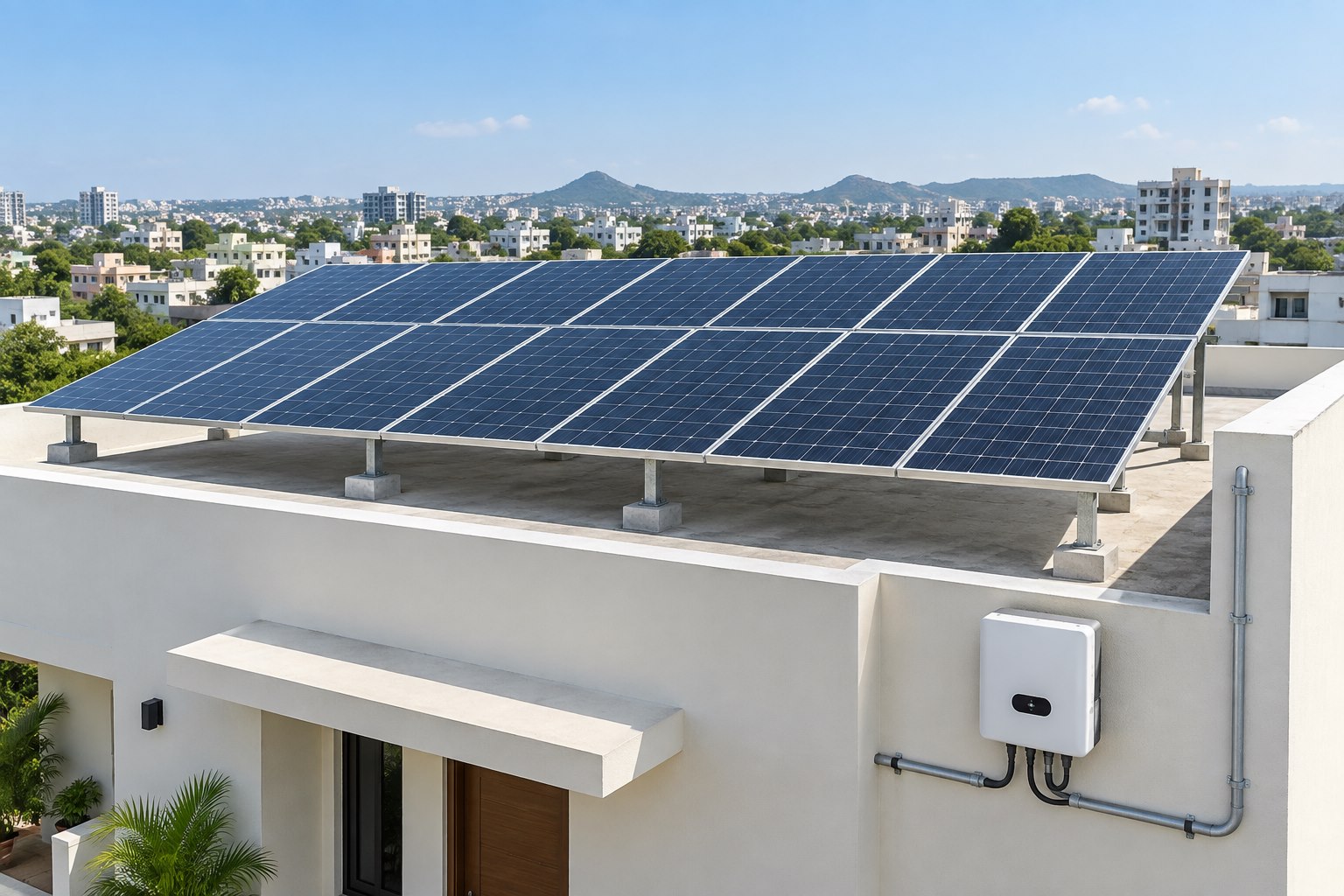 DC power converted to AC
Overview
Choose the inverter around system size, roof layout, grid need, and future battery plan.
A good inverter selection is not only about watt rating. It should match the solar panel strings, MPPT range, protection arrangement, monitoring expectation, and whether the customer needs on-grid savings or hybrid battery backup.
DC to AC conversion
MPPT matching
Monitoring ready
Works with ACDB-DCDB, SPD, MCB, earthing, and isolation arrangements to support safer operation.
Many modern inverters support mobile or web monitoring so owners can watch production and faults more clearly.
Common Options
Solar inverter types used in rooftop projects.
On-Grid Inverter
Useful for bill-saving rooftop solar where the system works with the electricity grid and net metering.
Hybrid Inverter
Useful when the customer wants solar generation plus a battery-ready path for backup planning.
String Planning
Panel strings must match the inverter voltage and current window so the system can generate properly.
Monitoring Setup
Wi-Fi or data logger based monitoring helps owners and service teams understand daily generation.
Best Fit
- Homes planning 1 kW to 10 kW rooftop solar with net metering.
- Shops, offices, schools, and small commercial sites needing dependable solar conversion.
- Projects where inverter sizing should be matched with panels, DC wire, ACDB-DCDB, and earthing.
- Customers who want monitoring visibility and a cleaner service path after installation.
"The inverter decides how cleanly solar generation becomes useful electricity."SolarWalaa inverter note.